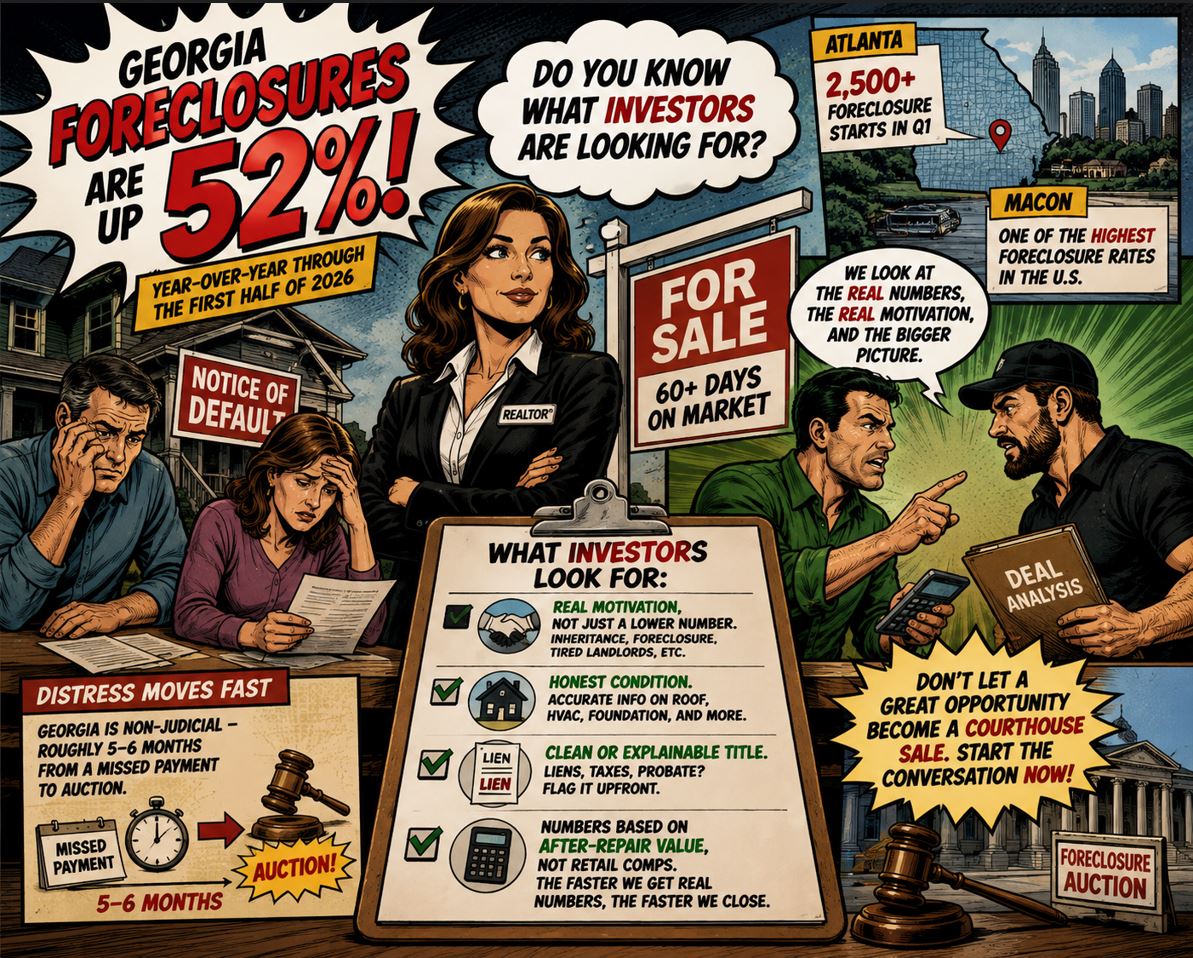
Georgia foreclosure filings are up 52% year-over-year through the first half of 2026 — one of the fastest increases of any state in the country. Atlanta alone logged over 2,500 foreclosure starts in Q1, putting it among the top five metros nationally. Macon's foreclosure rate is now one of the highest in the U.S.
That number is easy to read past. But behind it is a question worth sitting with: when a distressed or stale listing crosses your desk, do you actually know what turns it into a deal investors want — or are you guessing at a price and hoping someone bites?
Here's what's actually happening on the buy side right now, and what we look for before we make an offer.
Distress is moving faster than most sellers realize. Georgia's foreclosure process is non-judicial, which means it moves quickly — roughly five to six months from a missed payment to auction. That's a narrow window. A seller who thinks they have time to 'wait and see' often doesn't, and the properties that get real offers are the ones where someone recognized the urgency early, not after the notice showed up.
A stale listing isn't a dead listing — it's a signal. Nationally, more than 40% of active listings have sat 60+ days without a contract. When a property drifts from 'Coming Soon' to month four, that's usually the moment a seller's price expectations and the market have finally started to align. That's exactly where we start paying attention — not because something's wrong with the property, but because the seller is finally ready for a real conversation.
What actually gets us to make an offer:
Real motivation, not just a lower number. Inherited property, an approaching foreclosure date, a landlord who's done managing tenants — deals move when there's a genuine reason to close quickly, not just a price that's technically negotiable.
Honest condition. We don't need the home staged. We need accurate answers on the roof, HVAC, and foundation so we can underwrite fast instead of walking away from uncertainty.
A clean or explainable title. Liens, back taxes, or probate don't scare us off — but they need to be flagged upfront. Surprises at closing are what kill deals, not the issues themselves.
Numbers based on after-repair value, not retail comps. A property priced against a fully renovated neighbor doesn't work for us. The faster we get real repair scope, the faster we can commit.
So the question isn't really about the 52% — it's what you do with it. If you've got a listing that's not moving, a seller who's mentioned foreclosure or inheritance, or a property that needs more honesty than staging, that's exactly the conversation worth having before it becomes a courthouse sale instead of a closing.